From
DUB
Dublin
To
DBV
Dubrovnik
AirlinesAer Lingus · Ryanair
Flight time
3h 15m
Seasonal, roughly April to October
Croatia · Mediterranean & Canaries
Marble streets, mighty city walls and an Adriatic warm enough to swim in October.
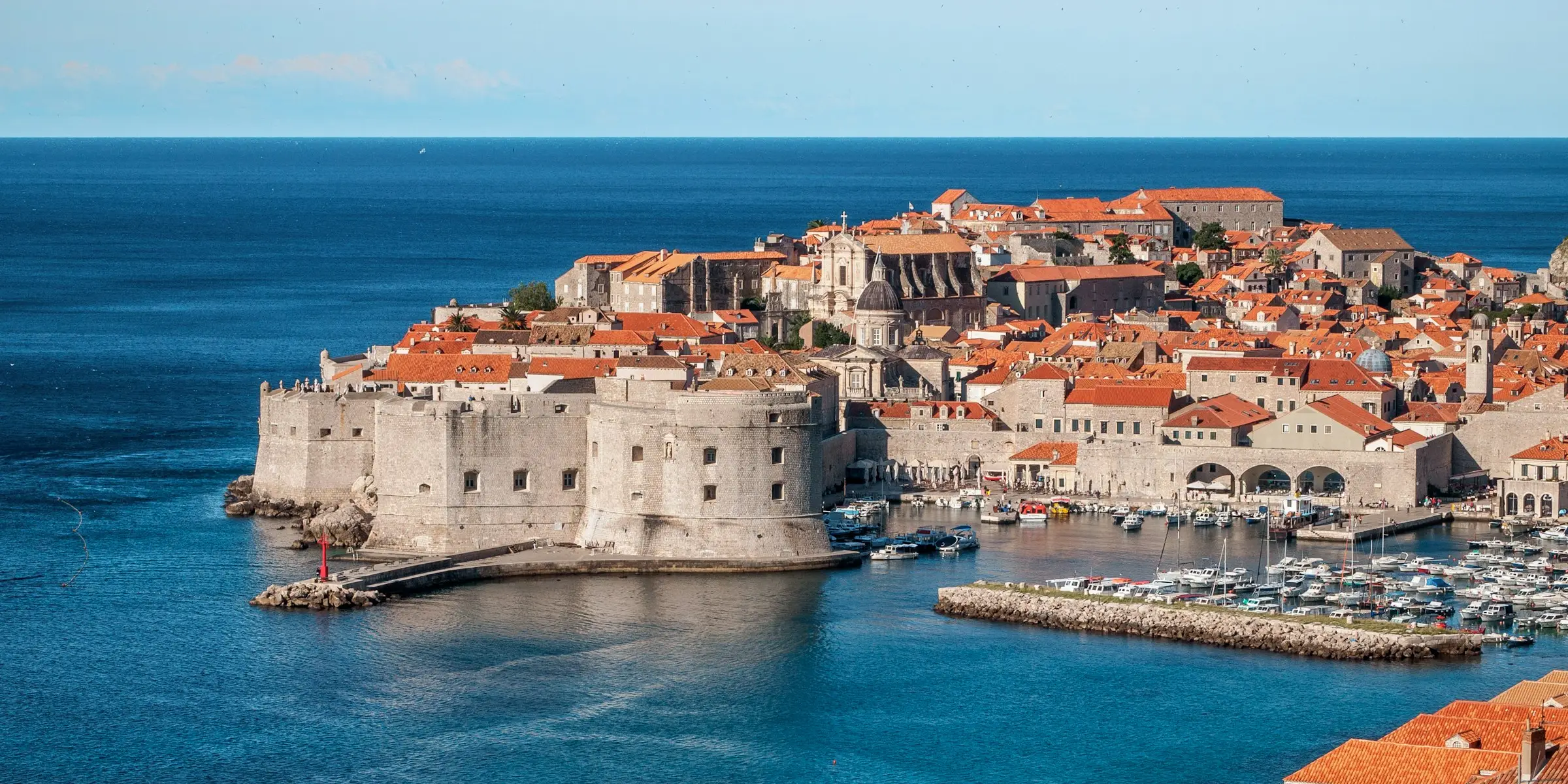
Photo: Ivan Ivankovic / Unsplash
01 · Why go
Dubrovnik’s Old Town is a near-complete medieval city, ringed by walls and paved with pale limestone polished smooth by centuries of footsteps, on a sea so clear you can count the pebbles from the rocks. Walk the Stradun at 7am, before anyone else is up, and you’ll understand why people fall for it.
Much of the best of it lies just beyond the walls. Lokrum is a 15-minute boat ride away for peacocks and rock swimming; the near car-free Elaphiti islands are a cheap public ferry from Gruž; Ston, an hour’s drive north, has its own walls and oysters straight from the bay. Back in town, ride the cable car up Mount Srđ for sunset, then find dinner with a view of the old harbour.
It suits couples, history lovers and swimmers who prefer clear water and rocks to wide sandy beaches. Families do well in Lapad, with its promenade and gentler bays.
Now the honest part. In July and August, cruise passengers and coach tours pour through the gates from mid-morning, temperatures sit around 29°C, and Old Town prices rival those of big Western European cities. Direct flights from Ireland are seasonal, too. May, June, September and early October are the sweet spot: warm sea, long evenings and manageable crowds.
Tempted by a day trip to Kotor or Mostar? Read our guide to eSIMs and roaming first, because EU roaming stops at the Croatian border.
02 · When to go
Best: May–Jun, Sep–Oct. Also good: Apr, Jul–Aug.
03 · Getting there
Typical direct flight times. Schedules change by season, so always check the current timetable.
From
DUB
Dublin
To
DBV
Dubrovnik
AirlinesAer Lingus · Ryanair
Flight time
3h 15m
Seasonal, roughly April to October
From
LGW
London
To
DBV
Dubrovnik
AirlinesBritish Airways · easyJet
Flight time
2h 40m
Most frequent April to October
From
ZAG
Zagreb
To
DBV
Dubrovnik
AirlinesCroatia Airlines
Flight time
55m
Year-round; useful for off-season connections
From the airport: The airport sits about 20km south of the city. A shuttle bus timed to arrivals runs to the Pile Gate and on to the main bus station in Gruž, taking about 30–40 minutes; a taxi or Uber takes 25–30 minutes.
04 · Where to stay
Best for: Atmosphere and romance
Sleeping inside the walls means you have the marble streets to yourself early and late, after the day-trippers leave. It's car-free and full of steps, apartments rarely have lifts, and bars can be noisy at night. Expect the highest prices and the smallest rooms.
Best for: Views and swimming
Just east of the Ploče Gate, climbing the hillside above Banje Beach, with the best views back over the Old Town and Lokrum. Several upmarket hotels are here, five to ten minutes' walk from the walls. The hill is steep, so check how many steps your accommodation involves.
Best for: Families and value
A leafy peninsula west of the Old Town with a pedestrian promenade, the pebbly bays of Lapad and Sunset Beach, and bigger hotels with pools. Frequent buses reach the Pile Gate in about 15–20 minutes. You get more space for your money, at the cost of a bus ride into the walls each evening.
Best for: A quieter base
A small harbour town about 20km south, close to the airport, with waterfront restaurants and coastal walks. In season, boats run to Dubrovnik's Old Port in about 45 minutes, and buses link the two. It's far calmer, though you'll be watching the time for the last boat or bus back.
05 · Getting around
The Old Town is pedestrian-only and very walkable, though it's all steps once you leave the Stradun, the main street. Libertas city buses link the Pile Gate with Lapad, Gruž port and Ploče; tickets are cheaper from a kiosk than from the driver. Boats to Lokrum leave from the Old Port, and Jadrolinija ferries to the Elaphiti islands from Gruž.
Parking near the Old Town is scarce and expensive, and buses and boats cover the main sights. Hire a car for a day only if you want Ston, the Pelješac wine country or the Konavle valley at your own pace; Montenegro and Bosnia need cross-border cover, so check with the rental firm.
06 · Things to do
The circuit of almost 2km takes 1.5–2 hours, with terracotta roofs on one side and open sea on the other. There's little shade, so go at opening or late in the afternoon and bring water. Tickets aren't cheap; compare a walls-only ticket with the Dubrovnik Pass, which bundles the walls with several museums and bus travel.
A 15-minute boat ride from the Old Port lands you on a wooded nature reserve with peacocks, a botanical garden, a ruined monastery and rocky swimming spots. Bring water shoes and a picnic. Nobody stays overnight, and the last boat back leaves in the early evening, so check the time when you arrive. Boats run roughly from spring to late autumn.
The cable car lifts you more than 400m above the city in a few minutes for the classic view over the walls and islands, best at sunset. Or walk the zigzag path up in about an hour, starting early because it's exposed and hot. At the top, the Napoleonic-era fort houses a museum on the 1991–92 siege of the city.
Banje Beach is the obvious spot and gets packed. Better: the rocks below the two Buža bars, reached through small openings in the seaward walls, where you can swim in deep, clear water and dry off with a drink. Water shoes help with the rocks and the occasional sea urchin.
Skip the pricey island-hopping tours and take the Jadrolinija ferry from Gruž to Koločep, Lopud and Šipan. Lopud is almost car-free, and its sandy Šunj beach is a rarity on this rocky coast; it's about a 30-minute walk over the hill from the harbour. Check return times before you settle in.
07 · Stay connected
Croatia is in the EU, so Roam Like at Home applies (at the time of writing, November 2026). The catch is geography: Montenegro and Bosnia and Herzegovina aren't covered, and phones near the border or on the coast road through Neum can latch on to their networks and run up charges. Turn off automatic network selection near borders, and get an eSIM with non-EU coverage if you're day-tripping to Kotor or Mostar.
More detail in our guide to eSIM vs roaming for Irish travellers.
08 · Insurance
Your EHIC covers state healthcare in Croatia, but many clinics in tourist areas are private and won't accept it, and it's no use in Montenegro or Bosnia. Travel insurance fills the gaps: private care, cancellations, lost bags and getting you home.
Not sure what the EHIC covers? Read do you need travel insurance in Europe?
Dubrovnik cheat sheet
Check the port authority's published cruise schedule before you plan your days, and save the walls and the Stradun for before 9am or after about 4pm, when most day visitors have gone. The city now caps cruise passenger numbers, but peak summer days are still busy. Staying overnight in or near the Old Town is the single best fix.
Generally not. At the time of writing, direct flights from Dublin are seasonal, running roughly from April to October, so check current schedules before you commit. Out of season you'll connect through a hub such as London, Frankfurt or Zagreb, and many restaurants and boat services scale back.
Yes. Kotor in Montenegro is around two hours' drive each way, plus the border, where summer queues can add an hour or more. You'll need your full passport, not the passport card, and neither EU roaming nor your EHIC applies in Montenegro. Organised tours take care of the driving and the cross-border paperwork.
Pricier than most of Croatia: Old Town restaurants and July and August accommodation are on a par with big Western European cities. The shoulder months (May, June, September and October) are noticeably cheaper and far more pleasant. Eat in Gruž or Lapad, and use the public ferries rather than tour boats, to stretch the budget.
Last updated
Book this trip
Dubrovnik, sorted.
Partner links. We may earn a commission at no extra cost to you.How it works
Phones & data
Your Irish plan already works across the EU, mostly. Here's where the small print bites, when an eSIM earns its keep, and when it's money you didn't need to spend.
8 min read

Flights
The headline fare is only the opening offer. Here's how to find the cheap dates, dodge the extras and know what you're owed when it all goes wrong.
8 min read

Spain
Gaudí, Gothic lanes and a Mediterranean beach, all in one walkable city.
Italy
Ancient ruins at every turn, carbonara done properly and piazzas made for lingering.
Italy
Cliffside villages, lemon groves and boat days between coves: worth every hairpin bend.