From
DUB
Dublin
To
CPH
Copenhagen
AirlinesNorwegian · Ryanair · SAS
Flight time
2h 10m
Direct
Denmark · Nordics
Harbour swims, cinnamon buns and Tivoli's lights, all an easy bike ride apart.
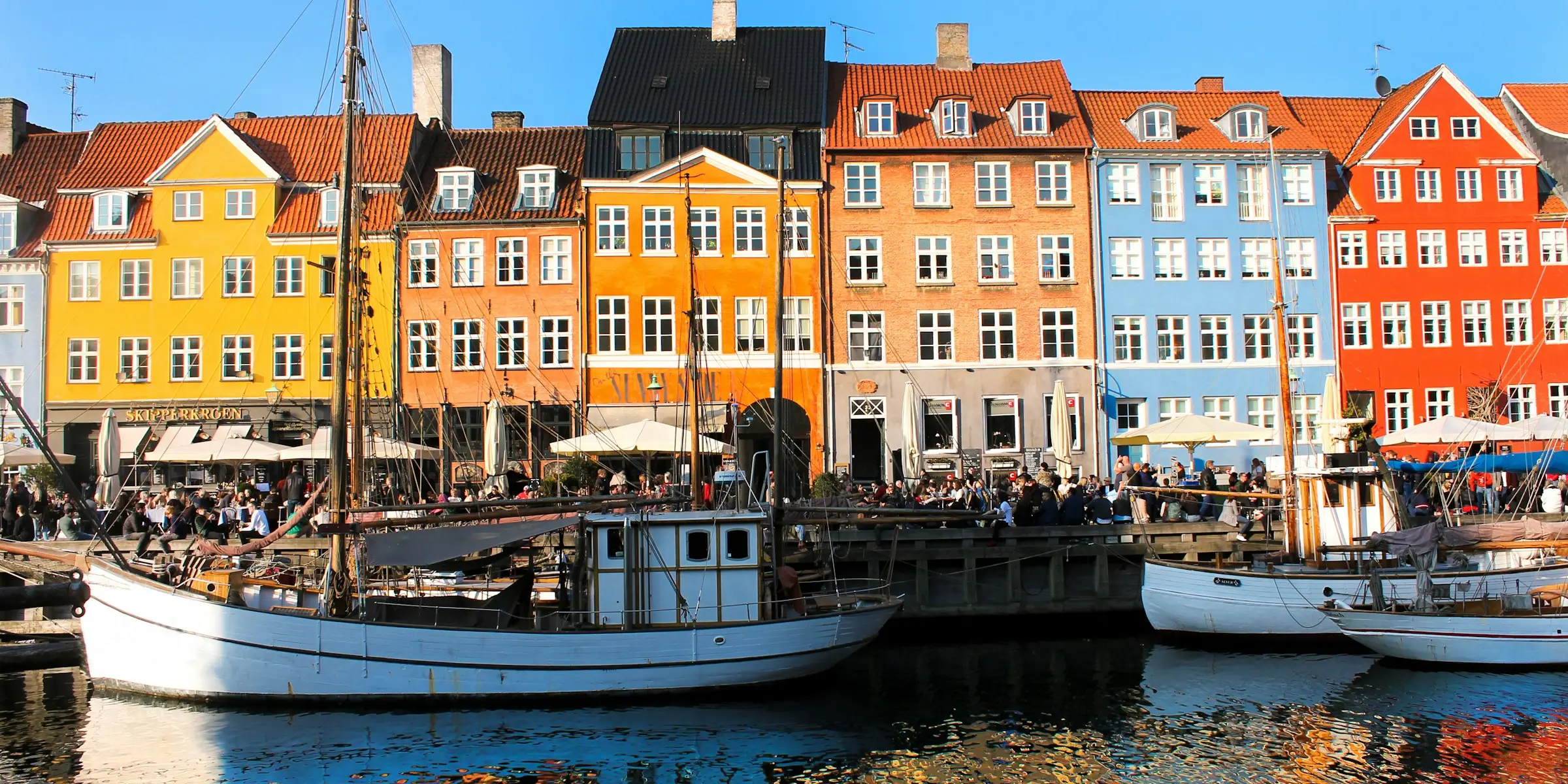
Photo: C1 Superstar / Unsplash
01 · Why go
Copenhagen is what happens when a city takes everyday life seriously. The harbour is clean enough to swim in, the cycle lanes are wide enough for cargo bikes on the school run, and the bakeries would be destinations anywhere else. It’s two hours from Dublin, and the metro gets you from the airport to the centre in about 15 minutes, so even a short break feels unhurried.
Summer is the time to go. From May to September the city lives outdoors: harbour baths, canal-side drinks, street food at Reffen, and June evenings that stay light past 10pm. Winter has its own pull, with Tivoli’s Christmas season, candlelit cafés and hygge done properly, but daylight is short and the wind off the water bites.
It suits food and design lovers, couples and families: children love Tivoli, the harbour buses and CopenHill, the artificial ski slope on the roof of a power plant. Rent a bike and you’ll see most of the city in a day.
The honest caveat is price. Copenhagen is one of Europe’s most expensive cities, and a round of drinks or a restaurant dinner will make Dublin look reasonable. Balance it with smørrebrød lunches, bakery breakfasts and the free stuff: swimming, parks, Christiania and simply walking the harbour.
It’s also one of the easier picks on our list of weekend city breaks under three hours from Dublin.
02 · When to go
Best: May–Sep. Also good: Apr, Oct, Dec.
03 · Getting there
Typical direct flight times. Schedules change by season, so always check the current timetable.
From
DUB
Dublin
To
CPH
Copenhagen
AirlinesNorwegian · Ryanair · SAS
Flight time
2h 10m
Direct
From
LHR
London
To
CPH
Copenhagen
AirlinesBritish Airways · SAS
Flight time
1h 55m
Direct
From
AMS
Amsterdam
To
CPH
Copenhagen
AirlinesKLM · SAS
Flight time
1h 25m
Direct
From the airport: The M2 metro runs 24 hours a day and reaches Kongens Nytorv in about 15 minutes; DSB trains get to Copenhagen Central (København H) in roughly the same time. A taxi takes about 20 minutes but costs far more.
04 · Where to stay
Best for: First-timers
The old city centre around Strøget, Nyhavn and Kongens Nytorv, with Rosenborg Castle and the King's Garden a short walk away. Everything is close, and the metro runs straight to the airport. Hotels here carry a premium, and the Nyhavn restaurants charge for the view.
Best for: Food and nightlife
The old red-light district is now the city's best area for eating and drinking, centred on Kødbyen, the former Meatpacking District, and Istedgade. It's next to Central Station and Tivoli, so handy for trains and the airport. A few streets near the station are still rough around the edges.
Best for: Local life on a budget
Young and multicultural, with Jægersborggade's tiny cafés and shops, the Superkilen park and Assistens Cemetery, where Hans Christian Andersen and Kierkegaard are buried and locals picnic in summer. Rooms are generally cheaper, and the M3 City Circle Line gets you to the centre in minutes.
Best for: Couples
Canals lined with houseboats, the corkscrew spire of the Church of Our Saviour, and Christiania next door. It feels like a small harbour town five minutes from the centre, and the M2 metro runs direct to the airport. Hotels are few, so book early for summer.
05 · Getting around
The driverless metro (lines M1 to M4) runs around the clock and, with S-trains, buses and harbour buses, covers the whole city; buy tickets in the DOT Tickets app or get a City Pass, which includes the airport. Copenhageners cycle and you should too: bike hire is easy to find, and the cycle lanes are wide and separated from traffic.
You won't want one in the city, where parking is expensive. Trains run to the Louisiana museum, Helsingør and Malmö, so only hire if you're heading for Møns Klint or touring Zealand's coast.
06 · Things to do
The 1843 pleasure garden in the middle of the city, all lanterns, a century-old wooden roller coaster and lakeside restaurants. It opens in seasons, not year-round: summer (spring to late September), Halloween in October, and Christmas from mid-November into early January. Entry and rides are paid separately, and summer Friday-night concerts are included with entry.
A one-hour canal tour from Nyhavn or Gammel Strand is the easiest way to get your bearings. In summer, do as locals do and swim at the free Islands Brygge harbour bath, or rent a small electric picnic boat and skipper yourself. Go late afternoon, when the light turns golden and the crowds thin.
Take the train north to Humlebæk (about 35–40 minutes), then walk ten minutes to the Louisiana Museum of Modern Art; its sculpture park above the Øresund is worth the trip alone. Continue to Helsingør for Kronborg Castle, Shakespeare's Elsinore, and you've filled a superb day. Louisiana is closed on Mondays.
Rosenborg keeps the Danish crown jewels in its basement treasury; book a timed ticket in summer and go at opening. Afterwards, walk through the King's Garden to Torvehallerne, the glass food halls by Nørreport station, for smørrebrød, good coffee and a kanelsnegl (cinnamon swirl).
The spire of Vor Frelsers Kirke has an external spiral staircase that narrows to almost nothing at the top, with a big view as the reward. It closes in bad weather and queues build, so go early. Christiania, the self-governing 'freetown' nearby, is worth a walk for its homemade houses and lakeside paths; respect the signs about photography.
07 · Stay connected
Denmark is in the EU, so Roam Like at Home applies (at the time of writing, November 2026), and coverage is excellent across the city and on trains. If you're on prepay or a budget SIM-only plan, check your fair-use data cap before relying on maps and the DOT app all weekend. An eSIM makes sense if you're working remotely, tethering a laptop or need far more data than your plan allows; a hop to Malmö doesn't change anything, as Sweden is in the EU too.
More detail in our guide to eSIM vs roaming for Irish travellers.
08 · Insurance
Your EHIC covers necessary state healthcare in Denmark on the same terms as locals. It doesn't cover private care, cancellations, lost bags or getting you home, so take out travel insurance as well.
Not sure what the EHIC covers? Read do you need travel insurance in Europe?
Copenhagen cheat sheet
Tivoli opens in seasons: summer (from spring to late September), Halloween through October, and Christmas from mid-November into early January. This winter's Christmas season runs from 13/11/2026 to 03/01/2027. It's closed between seasons, so check the dates on Tivoli's website before you book flights.
Yes, it's one of Europe's pricier cities, and a beer in a bar or a sit-down dinner will cost noticeably more than in Dublin. Save by making lunch your main meal (smørrebrød and street food are good value), using a City Pass for transport and making the most of the free stuff: harbour swimming, parks, Christiania and the cycle lanes.
It covers public transport across the capital region, including the airport, plus entry to dozens of museums and attractions. It pays off if you'll see two or three paid sights a day. For a slower trip, a City Pass for transport plus individual tickets is usually cheaper.
Easily. Øresund trains from Copenhagen Central and the airport cross the bridge to Malmö in around 35–40 minutes. Carry your passport or passport card, as ID checks on the crossing are sometimes in place. Sweden uses the krona, but cards work everywhere.
Last updated
Book this trip
Copenhagen, sorted.
Partner links. We may earn a commission at no extra cost to you.How it works

Inspiration
Out the office door on Friday, ordering dinner in another country by nine. Twelve short hops that make two nights away feel like a proper holiday.
7 min read

Flights
The headline fare is only the opening offer. Here's how to find the cheap dates, dodge the extras and know what you're owed when it all goes wrong.
8 min read

France
Zinc-bar coffees, world-class art and long dinners that drift towards midnight.

Spain
Gaudí, Gothic lanes and a Mediterranean beach, all in one walkable city.

Scotland, UK
A castle on an old volcano, Georgian crescents and snug pubs, about an hour from Dublin.